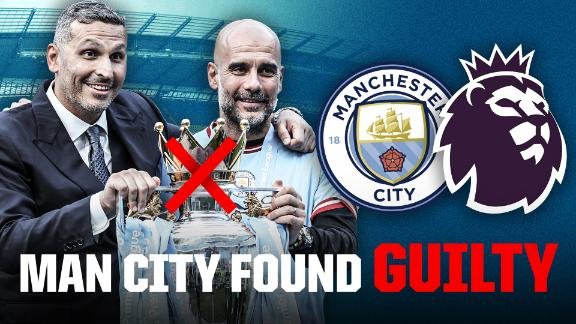
Manchester City have been found guilty by an independent Premier League commission of serious financial-rule breaches spanning nine seasons, from 2009-10 to 2017-18. However, the case is not over: City deny wrongdoing, filed an appeal on October 1, and no punishment has yet been imposed.https://rgmedianetwork.blog/
Manchester City found guilty
In one of the most consequential rulings in English football history, an independent commission concluded that Manchester City breached Premier League financial rules over almost a decade. The Premier League announced the decision on September 29, saying City were guilty of all charges relating to serious financial breaches during the relevant nine-season period, as well as most charges concerning failure to cooperate with the League’s investigation.
The commission’s central finding was that City used “sham” commercial agreements—contracts that did not reflect the true economic arrangement—to make revenue appear higher and expenses appear lower than they actually were. According to the Premier League, these arrangements artificially increased City’s reported income and reduced costs by more than £900 million. The purpose, the commission found, was to give the appearance that City complied with domestic profitability rules and UEFA’s financial regulations.
The findings go beyond a technical accounting dispute. The commission concluded that City filed misstated accounts, concealed the club’s real financial position from auditors and regulators, and acted with the intention of circumventing Premier League rules. It also upheld three of four allegations that City failed to cooperate properly and in good faith with the Premier League’s investigation.
What the allegations involved
The original case, referred to an independent commission by the Premier League in February 2023, covered more than 100 alleged breaches. The charges included failures to provide accurate financial information, incomplete disclosure of manager and player remuneration, breaches of UEFA financial regulations, breaches of Premier League profitability and sustainability rules, and alleged non-cooperation with the investigation from 2018 onward.
The key issue was the source and reporting of commercial sponsorship income. The commission found that several Abu Dhabi-linked sponsors paid only a portion of the sums stated in City’s accounts. It concluded that the remainder was funded by Abu Dhabi United Group Investment & Development Ltd (ADUG), the club’s owner, but was presented as commercial revenue. The panel also found arrangements that allegedly enabled City to understate operating expenses
The detailed figures show why this case has attracted such attention. The commission found that, of approximately £949.94 million declared as commercial revenue from Abu Dhabi sponsors across the period, only £119.25 million was genuinely paid by the sponsors. It said roughly £830.69 million came from ADUG and had been disguised through the sponsorship arrangements.
In practical terms, financial rules such as UEFA’s Financial Fair Play framework and the Premier League’s profitability rules exist to limit the ability of wealthy owners to inject unlimited money into clubs while presenting it as ordinary business income. If sponsorship income is inflated or ownership funding is disguised, a club may appear to comply with spending limits while gaining greater capacity to pay transfer fees, wages and agent costs than its competitors.
City’s response and appeal
Manchester City strongly reject the findings. The club says it is “innocent of the accusations” and argues that the commission’s decision contains “clear material errors, of law, principle and fact” and is unsafe. City formally lodged a comprehensive appeal on October 1.[reuters][bbc.co]
City’s defence is expected to focus substantially on the source of the disputed sponsorship funds. The club maintains that the disputed funding did not come from ADUG, its owner, and has argued that certain payments came from the Abu Dhabi government. The commission rejected that explanation, finding that the owner-funded explanation was supported by the evidence and that City’s alternative account was not credible.
The appeal will be handled privately by an independent three-person Appeal Board appointed through the Premier League’s Judicial Panel. Under League rules, an appeal hearing should normally take place within 12 weeks of filing, with a decision due within 30 days after the hearing concludes, though the complexity of the case could affect the timetable. It will be a review of the commission’s decision rather than a complete retrial.
What punishment could follow?
No sanction has been decided yet. The Premier League says the issue will be addressed in a separate hearing before the independent commission, likely after the appeal process has clarified whether the findings stand.
Possible sanctions under Premier League rules include:
- A formal reprimand or substantial financial penalty.
- A points deduction, either immediate or suspended.
- Sporting penalties such as transfer restrictions.
- Expulsion from the Premier League in the most severe scenario.[premierleague][apnews]
It is important not to treat relegation, expulsion or stripped titles as decided outcomes. They remain possible topics of debate, but the commission has not announced a penalty and City’s appeal remains unresolved. Any claim that the club has already been expelled, stripped of trophies, or punished with points deductions would be inaccurate.
The case could also trigger claims by rival clubs that believe they lost prize money, European qualification or other commercial opportunities because of City’s rule breaches. Reuters reports that rival clubs have been examining possible compensation claims, creating the prospect of further litigation even after the football disciplinary process ends.[reuters]
Why it matters
Premier League chief executive Richard Masters called it the “most significant” disciplinary case in the competition’s history. That assessment reflects both the scale of the alleged financial distortion and City’s prominence: during and after the period in question, the club developed into a dominant English and European force, winning multiple Premier League titles and eventually the Champions League.
For football supporters, the ruling raises a wider question about competitive integrity. Financial regulations are meant to ensure that success is not determined solely by an owner’s capacity to fund a club. If the commission’s findings survive appeal, the case may become a defining test of whether the Premier League can enforce its own rules consistently against its richest and most successful clubs. At present, though, the final sporting consequences remain undecided.[reuters][reuters]